Bank rails change the order-flow map
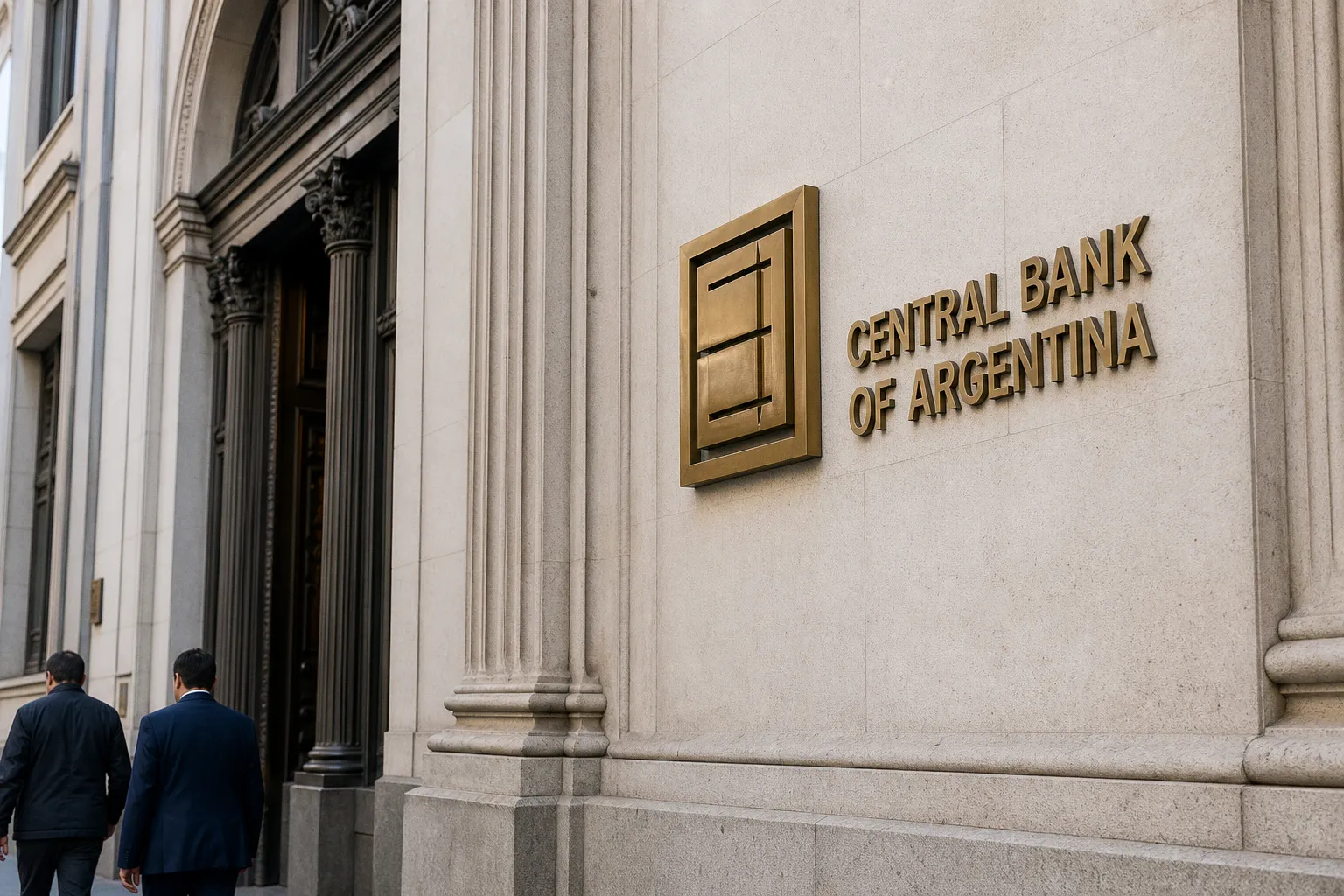
The Argentina item is thin on public detail. The confirmed point is limited: Argentina’s central bank is reportedly eyeing crypto trading for banks. No implementation timetable, eligible assets, bank list, custody model, or execution venue structure is confirmed in the available material.
That constraint matters. A quant system cannot price an unconfirmed market structure change as if it were live liquidity. The correct treatment is a watchlist flag, not a strategy input.
For related context, see UK Financial Conduct Authority Finalizes Comprehensive Crypto Rules.
Germany provides the cleaner observable case. Crypto Briefing reports that two of Germany’s largest banking networks are preparing to offer Bitcoin and Ether trading to retail customers through familiar mobile apps and branch platforms. The same report says cooperative banks have already started providing access to assets including Bitcoin, Ethereum, Litecoin, and Cardano using infrastructure developed by DZ Bank. DekaBank is expected to launch a similar solution for savings banks later this year.
The mechanical implication is simple:
- more retail access through primary banking relationships;
- less dependence on dedicated crypto platforms for some users;
- possible new pockets of predictable flow;
- unknown execution quality until venue routing is visible.
For bots, the edge is not “more users buy crypto.” That is not a model. The edge, if any, sits in measurable microstructure: spread behavior around banking-app trading windows, weekend liquidity decay, custody-driven withdrawal frictions, and whether bank platforms internalize or route externally.
The execution layer is the actual dataset
The German case also describes a shift in institutional posture. Traditional lenders had resisted retail crypto services because of volatility and investment-risk concerns. They are now moving further into trading access, partly to remain competitive and meet customer demand, especially among younger investors. Consumer advocates and industry experts still warn that crypto assets remain speculative and can produce substantial losses.
For automated systems, that warning translates into volatility regime control. Bank distribution does not remove tail risk. It may compress onboarding friction while leaving market variance intact.
A trading bot should not respond to this news by widening asset coverage blindly. The operational checklist is narrower:
- Separate announcement flow from executable flow.
- Track whether bank-linked activity creates repeatable volume clusters.
- Compare slippage on listed assets before and after retail rollout points.
- Monitor whether Bitcoin and Ether behave differently from Litecoin and Cardano under bank-app access.
- Avoid over-fitting to first-week flow if the sample has no stable standard deviation.
The key unknown is routing. If bank platforms send orders into existing liquidity venues, the effect may show as incremental volume with limited structural change. If flow is aggregated, internalized, delayed, or netted, external market signals may become less direct. That difference determines whether latency arbitrage, spread capture, or momentum systems gain any measurable advantage.
Practical read for algorithmic desks
Argentina should be treated as a policy-monitoring node. The only confirmed public signal is that the central bank is reportedly considering crypto trading for banks. Until source detail confirms rules, instruments, and banking participants, any backtest assumption is synthetic.
Germany is more actionable because the reported rails are clearer. Retail crypto access is being embedded into bank interfaces. That may alter acquisition channels and order timing. It does not automatically improve Sharpe ratio.
The clean response is a controlled data experiment:
- Tag bank-access headlines as exogenous events.
- Build pre/post windows around confirmed service rollouts only.
- Measure realized spread, depth, slippage, and volatility by asset.
- Exclude directional price prediction from the first model pass.
- Require persistence across multiple sessions before allocating capital.
The risk-adjusted verdict is restrained. Bank distribution can change flow topology. It does not create edge by itself. For automated crypto strategies, this is a market-structure watch event: useful only after the order path, venue linkage, and execution statistics become observable.