AI Trading Signals Bot: Sarah’s Journey to Automated Profits—and the Hard Parts Nobody Puts on the Dashboard
It is the gap between a signal appearing, deciding whether it is credible, placing the order, and discovering afterward that fees, spread, and a fast-moving candle quietly took most of the idea away.
That is the problem Sarah was trying to solve. “Sarah” is a composite of the workflow I see often: a trader with exchange accounts, a few alert channels, too many tabs open, and a reasonable belief that machine learning could help her react more consistently than a tired human staring at a chart at 2 a.m. Her goal was not to build a robot that prints money. It was to connect data, forecast, judgment rules, and execution into one system that could be inspected when markets got strange.
That distinction is where an AI trading signals bot becomes useful—or dangerous. A bot can turn market data, model forecasts, and text sentiment into a real-time alert. It can also trigger an order automatically. Those are related jobs, but they are not the same job, and treating them as identical is how traders hand too much authority to a prediction that has not earned it.
I have built enough automation workflows to know that the cleanest dashboard is often hiding the messiest assumptions. Let us break this down.
The anatomy of an AI signal is more ordinary than the marketing suggests
A legitimate AI signal workflow is not a crystal ball. It is a chain of decisions, each one with a failure mode.
For Sarah, the useful version began with three input streams:
- Market data: price, returns, volatility, bid-ask spread, volume, and sometimes order-book conditions.
- Model output: a probability, expected return range, direction score, or a classification such as “favorable,” “neutral,” or “avoid.”
- Text-derived sentiment: news headlines, social posts, and other public text processed through natural language processing.
The 2025 research on cryptocurrency forecasting gives this idea a fair hearing. Its authors compared dictionary-style sentiment analysis with pre-trained and fine-tuned deep-learning language models, then tested whether textual inputs improved forecasts and portfolio results in their validation scenarios. Their finding was encouraging: adding text data did improve the measured forecasting and portfolio metrics in those tests.
But that sentence needs to stay exactly where it belongs: inside the validation setup. It does not mean every tweet becomes a tradable insight, or that a neural network will continue to outperform when market conditions change next month.
Here is how I would translate the system into plain English:
| Layer | What it does | What Sarah should ask |
|---|---|---|
| Data connector | Pulls candles, trades, spreads, and text feeds into one workflow | Is the feed delayed, incomplete, or distorted? |
| Feature builder | Converts raw inputs into usable variables such as 4-hour momentum, volatility regime, or sentiment change | Does each feature exist at the moment the decision is made, or was future data accidentally included? |
| ML model | Produces a directional or magnitude forecast | Is this forecast calibrated and tested out of sample? |
| Signal filter | Decides whether the forecast is strong enough to deserve a trade | Does the expected move exceed costs and noise? |
| Execution layer | Sends an alert or places an order through an exchange API | What happens if the API fails, the price gaps, or only part of the order fills? |
| Monitoring layer | Logs every input, decision, order, fill, and exception | Can we reconstruct why the bot traded at 03:17? |
The word “signal” can hide a lot. The CFTC draws a useful line here: some algorithms automatically execute trades, while others provide buy-and-sell signals to subscribers. Sarah started with the second option for a reason. A signal bot gave her a review window. Automated execution removed it.
That does not make alerts inherently safer. It simply means there is a human hand between prediction and capital.
An AI signal is not an instruction. It is a forecast that still has to survive costs, context, and execution.
The model should predict a decision, not merely the next candle
This is one of the most practical design choices in the entire workflow.
Many early machine-learning trading systems predict whether the next hourly or daily price move will be up or down. It sounds sensible because it gives a clean label for model training. But a tiny correct move is not automatically a profitable trade. If Bitcoin rises by less than the spread, fee, and slippage, “right” can still lose money.
The better question is usually not “Will the next candle be green?” It is closer to: “Is there enough expected movement, after costs, to justify entering this position under current conditions?”
The 2025 crypto forecasting study used another useful target: local price extrema rather than daily direction alone. In practical terms, the model is trained to notice potential turning areas rather than react to every minor fluctuation. The authors reported that this approach reduced trading frequency and portfolio volatility in their scenarios.
For Sarah’s workflow, that translated into a less exciting but more durable rule: the bot could watch constantly, but it did not need to trade constantly.
The transaction-cost trap is where promising backtests go to disappear
The most common workflow mistake I encounter is wonderfully simple: a model generates a directional score, the score crosses 0.5, and the automation triggers a buy or sell. No friction gate. No spread check. No estimate of slippage. No pause during a volatility spike.
It feels efficient because the workflow is short. It is also exactly how a decent research result can become a poor live strategy.
A May 2026 Bitcoin trading preprint tested XGBoost, LSTM, and iTransformer approaches on roughly 70,000 hourly BTC-USDT observations from 2018 through 2026, using a 27-fold walk-forward protocol. That is a much stronger setup than fitting a model once and admiring its historical chart.
Yet the headline lesson was not that one model had found the market’s secret. Once researchers applied a 10-basis-point transaction-cost assumption, naive strategies that traded on the forecast direction failed.
Ten basis points is not a dramatic number on a slide. In live automation, it is the difference between a model being intellectually interesting and a strategy being usable.
The researchers then applied a cost-aware execution filter: trade only when forecast magnitude exceeded a threshold based on transaction costs. In one long-only XGBoost configuration, the number of trades fell from 10,619 to 251. That is a study-specific result, not a universal recipe, but the operational lesson is exceptionally clear.
Sarah did not need an AI bot to “find more trades.” She needed it to reject trades that were too small to pay for themselves.
Build the friction gate before connecting the exchange key
If I were setting up Sarah’s automated crypto signal execution, I would put the following gates between the model and the order endpoint:
1. Expected-move threshold. The predicted edge must clear estimated round-trip fees, current spread, expected slippage, and a buffer for forecast error. A forecast of “up 0.08%” is not actionable if getting in and out may cost more than that.
2. Liquidity check. The bot should compare intended order size with actual depth around the current price. A strategy that works on a small notional amount may move the market or receive poor fills when scaled.
3. Volatility regime filter. If realized volatility suddenly expands beyond the range used in training, the bot should reduce size or stop triggering. The model may be seeing a market it does not recognize.
4. Cooldown logic. After a stop-loss, exchange error, or cluster of contradictory signals, automation should wait. Repeating the same decision faster is not a recovery plan.
5. Position and exposure limits. A signal is not allowed to stack endlessly into the same coin, correlated assets, or one direction of the market. This limit belongs in the execution service, not merely in a trader’s memory.
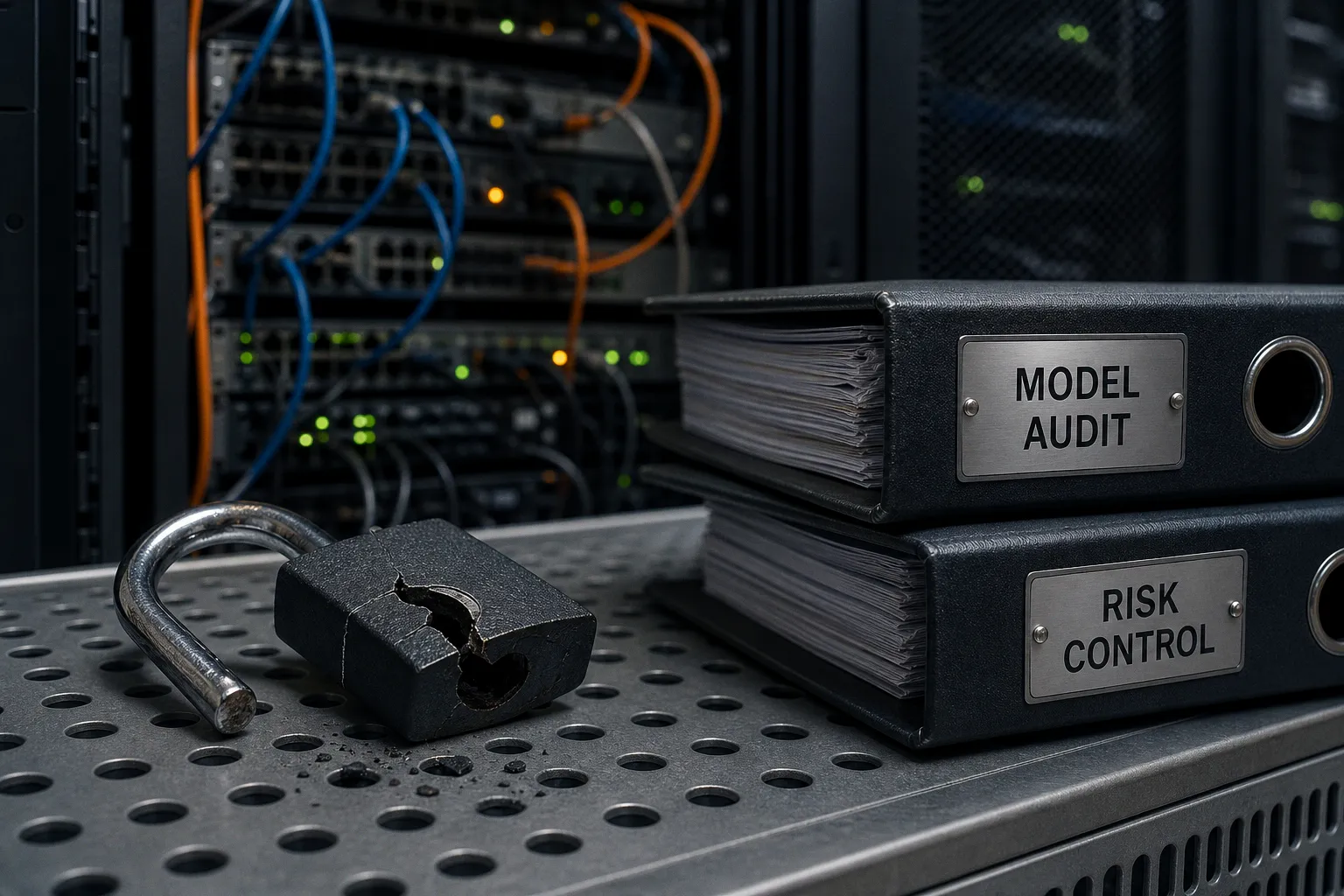
6. Kill switch and audit log. Sarah should be able to disable all new orders in one action and review the exact features, model score, thresholds, API response, and fill data behind every trade.
Here is why that matters: a machine learning signal provider is judged not by how elegant its prediction chart looks, but by what remains after the mechanics of trading take their share.
A simple rule I use in workflow design is this: if a bot cannot explain why it did not trade, it is probably too eager to trade.
Sentiment data can help, but the feed is not the market
It is easy to understand the appeal of crypto sentiment analysis AI. Markets move on narratives. Token listings, regulatory headlines, protocol exploits, ETF rumors, exchange outages, macro surprises—text often reaches traders before it is fully reflected in a price series.
That is why natural language processing belongs in a serious predictive analytics stack. A language model can do more than label a post “positive” or “negative.” It can identify entities, distinguish a Bitcoin headline from an altcoin headline, detect whether a story is new or recycled, and measure whether attention is accelerating rather than merely loud.
But sentiment is not a truth machine.
A workflow that sees 3,000 bullish posts about a token may be seeing genuine demand. It may also be seeing coordinated promotion, recycled headlines, bots, or a crowd responding to a price move that already happened. The same problem applies to volume and order-flow inputs.
In an October 2024 enforcement action, the SEC alleged that certain crypto market makers used self-trading, or wash trading, along with bots that at times generated quadrillions of transactions and billions of dollars of artificial trading volume per day. Those are allegations, not a statement that every unusual volume spike is manipulation. Still, the scale described makes the design issue impossible to ignore.
If Sarah’s model treats volume as evidence of conviction without asking where it came from, somebody else can write the input that triggers her trade.
A more resilient sentiment workflow
I would not feed raw social volume directly into a trading rule. I would connect it to a set of quality controls:
- Weight sources differently instead of treating every post as equal.
- Deduplicate near-identical messages, reposts, and headline rewrites.
- Separate “attention” from “direction”; a surge in mentions can signal uncertainty rather than bullishness.
- Compare text sentiment with spot price behavior, derivatives funding, and liquidity conditions.
- Downweight assets where exchange concentration, shallow books, or suspicious turnover make the data easier to distort.
- Record the source mix behind every alert, so a trader can see whether a signal came from broad news coverage or one noisy channel.
This takes a little longer to build. It also prevents the system from confusing a loud room with an informed one.
In crypto, the data pipeline needs skepticism built in; otherwise your bot automates someone else’s manipulation.
AI bot signal accuracy is the wrong number to worship
When someone asks me for the accuracy of an AI trading signals bot, I understand the question. They want to know whether the system works. But accuracy alone is too blunt to answer it.
Imagine a bot correctly predicts 60% of next-hour directions. That may sound impressive. It can still lose if its losing trades are larger, if it churns through small moves, or if its winning predictions arrive after the profitable portion of the move has passed.
The model also needs to be measured in the same conditions in which it will operate. A backtest should state:
- the asset universe and exact testing period;
- whether validation moved forward through time rather than randomly mixing old and new data;
- the fee, spread, slippage, and funding assumptions;
- the trade-entry delay after a signal;
- the maximum drawdown;
- the number of trades, not just the return;
- whether model parameters were repeatedly tuned against the same historical sample.
I prefer a small report card that combines model and workflow metrics. For Sarah, that meant tracking not only hit rate but also average realized move after costs, rejected-signal quality, fill quality, time in market, drawdown, and the difference between paper-trading fills and live fills.
That last one is humbling. Paper trading is a useful API and logic test. It is not a faithful simulation of a crowded market, a stressed exchange, or a thin altcoin book at the moment a signal fires.
The CFTC has been blunt on the broader claim: AI cannot predict the future or sudden market changes. That should not discourage useful automation. It should stop us from assigning mystical powers to a forecasting model that is, at best, estimating patterns from imperfect historical data.
The fraud test begins with the promise, not the interface
The most polished scam pages in crypto often have the same ingredients as legitimate tools: a dashboard, a model name, an exchange connection flow, and a language of “AI-powered arbitrage” or “institutional signals.” The visual layer proves almost nothing.
What matters is what the operator promises, what they disclose, and whether the system can be independently examined.
On May 28, 2026, the SEC charged Nathan Fuller in an alleged crypto-asset fraud scheme involving claimed AI-based high-frequency arbitrage bots. The SEC alleged that roughly $12.3 million was raised from about 150 investors, with some promises of returns above 40–50% in 30–45 days or guaranteed profits exceeding 100% in as little as 21 days.
Those claims are not a performance benchmark. They are a flare in the night.
A credible provider can explain what the bot is designed to do, what data it uses, how often it trades, where it can fail, and how it handles execution. It does not need to reveal every line of proprietary code. But it does need to speak plainly about risk, costs, drawdowns, custody, API permissions, and the difference between a historical simulation and live results.
For Sarah, the safest setup was deliberately boring:
- Exchange API keys with trading permissions only, never withdrawal permissions.
- A separate sub-account or limited allocation for the automation.
- Alerts first, small live orders later, broader automation only after logs matched expectations.
- No funds transferred to a bot operator who claims to trade “on her behalf.”
- Daily reconciliation between the bot’s record, exchange fills, balances, and open positions.
This is not pessimism. It is normal operations.
Sarah’s best upgrade was trading less, not automating more
The turning point in this kind of journey is usually not a new neural network. It is a change in what “success” means.
At first, Sarah wanted continuous real-time crypto alerts automation: every possible opportunity routed into a notification and, eventually, into an order. The system was busy. Busy looked intelligent.
After adding cost thresholds, liquidity filters, source-quality checks, and a human approval step for unfamiliar market regimes, the workflow became quieter. Fewer signals arrived. Fewer orders were placed. The logs became readable.
That is progress.
The research result that cut one configuration from 10,619 trades to 251 is useful precisely because it challenges the usual instinct. The bot’s value is often not its ability to act at machine speed. Its value is its ability to watch a large, fragmented market without getting tired, then remain disciplined when the evidence is too weak.
I would set up an AI trading signals bot in stages:
1. Observe: collect data and log model scores without sending alerts.
2. Alert: send concise messages with the score, threshold, market context, and reason the signal passed its filters.
3. Approve: let a trader accept or reject orders while reviewing actual spread and liquidity.
4. Automate small: permit limited order placement with strict caps and a kill switch.
5. Review weekly: compare live results with the expected behavior, especially costs and rejected trades.
The time saved is real. Instead of manually checking several exchanges, sentiment feeds, and charts every hour, Sarah can have the workflow gather, score, filter, and document the decision in seconds. But the more valuable saving is not time. It is avoided impulse.
An AI trading signals bot can make a trader more consistent, more observant, and less dependent on fragmented screens. It cannot make uncertainty disappear, predict a sudden crypto-market shock, or turn a poorly designed strategy into automated profits just by attaching “AI” to the interface.
Build the system to earn your trust one logged decision at a time. That is slower than the hype. It is also how automation becomes something you can actually use.